Could your ecommerce imagery double your sales?
6 takeaways from our latest webinar
When a shopper ‘lands’ on a digital shelf, your product has a brief window of opportunity to explain what it is, why it is relevant, and why it should be selected over everything else on the screen. Because of this, product imagery becomes much more than just a visual representation of your pack. It plays a crucial role in the purchasing process by helping customers identifying goods, comprehending critical details, and eventually reaching a choice.
And that experience is evolving.
In our recent webinar, ‘Could your Ecommerce Imagery Double your Sales?’, WK360 Managing Director Lawrence Palmer and Head of Creative Peter True explored what optimised ecommerce imagery really means in 2026, the increasing impact of AI on the digital shelf, and how photography, CGI, and AI should fit into the production process.
Here are some of the key takeaways.
1.Your product imagery now has two audiences
For years, digital shelf optimisation has been focused on one audience: the human shopper.
This is still prominent and matters hugely. People still need to be able to recognise your brand, identify the products and variants, understand the pack size and see the information that’s relevant to their purchasing decisions – all whilst potentially viewing your product as a small thumbnail on a mobile screen.
But there's now another audience brands need to pay close attention to: AI.
AI shopping assistants and other AI-powered tools are increasingly becoming part of how consumers search for, compare and discover products. That means AI could be making decisions about which products are relevant before the shopper even reaches a conventional digital shelf.
Instead of searching for a particular product or brand, a shopper might ask for five healthy family dinners that can be made in under 30 minutes, high-protein snacks for children's lunchboxes. or a sensitive-skin laundry product without a strong fragrance.
AI has to interpret that intent and decide which products satisfy it.
For brands, this creates a new question alongside "Will shoppers notice my product?"
– Will AI understand my product well enough to recommend it?
And that's where the information surrounding your imagery becomes just as important as the image itself. Titles, descriptions, variants, ingredients, dietary information, benefits, identifiers and other product attributes all help AI understand exactly what a product is and when it might be relevant.
2. Optimised doesn't simply mean 'looks good'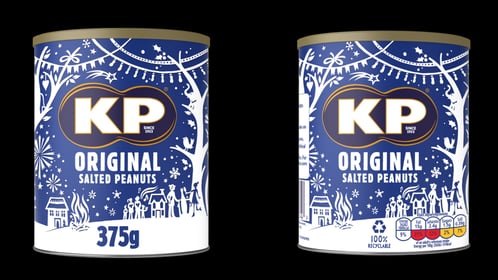
A perfect looking product image isn't necessarily an optimised image.
On the digital shelf, imagery has a functional job to do. It needs to communicate essential shopping cues quickly and clearly.
That includes obvious elements such as the brand, product type, flavour or variant and pack size, alongside category-specific information shoppers may be looking for – whether that's calorie content, gluten-free credentials, promotions or another important product benefit.
And there's another element that's surprisingly easy to overlook: colour.
Colour is a major part of product and brand recognition. If the shade a shopper sees online is noticeably different from the packaging they're familiar with in store, it can create uncertainty.
Maintaining accurate and consistent colour across digital shelf imagery therefore isn't simply a production detail, it's part of building recognition and trust in the product.
The goal isn't to cram every possible piece of information into one image. It's to understand which cues matter most to the shopper and make them as effortless as possible to find.
If a shopper has to work too hard to understand your product, there's another option only a click away.
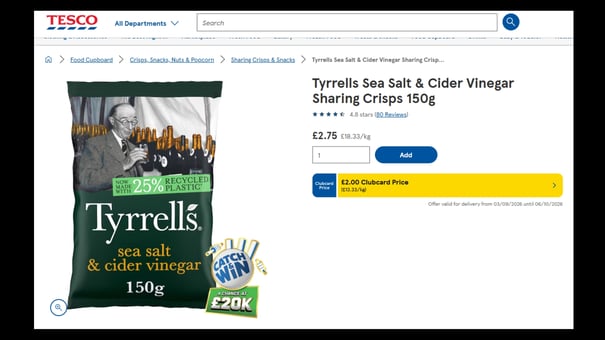
3. Don't stop at the hero image
Optimising the primary product image is important, but it's only part of the opportunity.
The wider image gallery gives brands more space to communicate the things that can't or shouldn't be squeezed into the hero image.
Supporting brand tiles can highlight nutritional information, promotions, ethical credentials, product benefits, the wider range and other useful information that helps a shopper understand what they're buying. Supporting imagery can introduce them to more of the range and potentially add another product to their basket.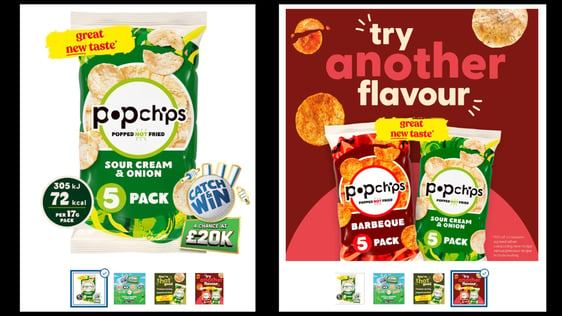
4. AI vs CGI vs photography is the wrong question
With generative AI developing at such speed, one of the obvious questions is whether brands still need traditional photography and CGI.
Our view is that this shouldn't really be a battle between the three.
Instead, brands should ask:
What's the right production method for this particular asset?
Photography remains incredibly powerful, particularly for food, people and complex lifestyle scenes where authenticity matters.
CGI offers a different set of advantages. Once a base model has been created, it can provide exceptional control and consistency across large volumes of assets and variants. Product information can be changed while angles, lighting and colour remain consistent, making it particularly valuable when creating imagery at scale.
Then there's AI.
AI is already opening up exciting possibilities for supporting assets, such as lifestyle scenes, backgrounds and contextual imagery that tell more of a story around the product.
But for primary eCommerce imagery, accuracy is non-negotiable. A wrong pack size, altered colour, inaccurate claim or hallucinated packaging copy can cause problems for both shopper and brand, and AI can still struggle to stay consistent across a whole range and is better for standalone images.
So the useful question isn't which technology will "win", but which combination gives each asset the accuracy, consistency, creativity and scale it needs. Whatever the method, creative and art direction still matter.
5. Product truth needs to be consistent everywhere
As AI plays a bigger role in shopping, accuracy matters even more. If a consumer asks an AI assistant whether a food product meets their dietary needs, its answer is only as reliable as the information behind it. The same goes for cosmetics, healthcare and household products, where claims, ingredients and quantities really matter.
That means the physical pack, product imagery, retailer listing and underlying product data all need to tell the same story. Where they don't, you've introduced ambiguity. A human might work out the discrepancy, but a machine may simply be more confident recommending a competitor with clearer information.
As Lawrence summed it up during the webinar:
Product truth has to be consistent everywhere: on the pack, in the image and in the data.
6. Great imagery still needs a great process behind it
One of the biggest themes from the webinar wasn't just about imagery at all. It was about process.
A great product image is only one part of getting a product onto the digital shelf. Brands also have to manage briefs, amends, approvals, colour, regulatory requirements, multiple SKUs, retailer specifications and tight launch timelines. When that process doesn't run smoothly, the result can be incorrect assets, extra pressure on internal teams and delayed launches.
That's why we put as much emphasis on the workflow around creative production as on the creative itself. At WK360, our bespoke workflow platform, 360Orbit, supports clients and internal teams from briefing and approvals through to sign-off and distribution. Because great eCommerce imagery isn't just about creating the right asset. It's about creating the right assets, accurately and consistently, at the speed and at the scale brands need.
Making your digital shelf work harder
The digital shelf keeps evolving. Shoppers still need clarity, consistency and compelling imagery, but brands now also need to think about how AI understands their products, how information stays consistent across every touchpoint, and how to adopt new technology without losing accuracy.
The answer isn't simply "use more AI", "create better packshots" or "add more images". It's bringing imagery, information, technology, creativity and robust production processes together.
Make it easy for shoppers to choose you. Make it easy for AI to understand you. And make sure the process behind your assets can deliver both.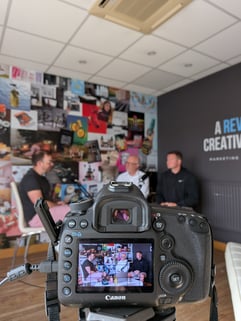
Missed the webinar? Watch Could your eCommerce Imagery Double your Sales? to hear the full conversation and see how your product imagery could work harder on the digital shelf.