A dive into how Optimised product imagery influences AI shopping assistants
FMCG companies have been mastering the art of appealing to human consumers for decades. Every component, from shelf placement and promotional displays to eye-catching packaging and compelling language, has been created with the intention of influencing consumers standing in front of a retail shelf.
But what happens when that shopper is no longer the first to assess your product?
As AI-powered shopping assistants, conversational commerce and intelligent search becomes part of everyday life and retail, brands face a new challenge. Customers are increasingly using AI to provide recommendations, evaluate options, or even finish purchases on their behalf. Rather than sifting through several product listings. A shopper may just enquire:
“Find me a healthier breakfast cereal for my family.”
“What is the best coffee under £10?”
“Reorder my usual washing powder, unless there’s a better value option.”
Ultimately, the shopper is still making the final decision currently, but AI is increasingly influencing which products make the shortlist, which raises the critical question for FMGC brands:
Will AI choose your brand?
The digital shelf is evolving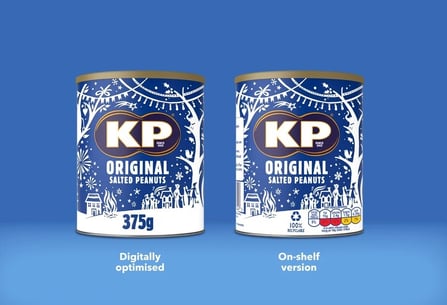
The digital shelf has always been about helping consumers discover and trust your products online.
Today, it is evolving into a more advanced form.
AI-powered retail experiences interpret products rather than just displaying them. They examine products’ digital identities, including product images, descriptions, packing claims, pricing, reviews and structured product data to determine which items best satisfy a customer’s needs.
Therefore, your digital assets become more than just promotional collateral. They become data!
And like any data, the quality directly affects how well your products can be understood, portrayed, and recommended across e-commerce.
How AI decides what to recommend
Unlike a human shopper, AI doesn't make decisions based on instinct, emotions, brand familiarity or attractive packaging. It analyses a range of signals, to determine which product fits the request best.
These may include:
- Product descriptions and specifications
- Structured product data and metadata
- Product imagery
- Packaging claims and on-pack information
- Pricing and promotions
- Availability
- Customer ratings and reviews
Whilst some AI tools use data from retailers’ websites, reliable online sources, and publicly accessible product content to generate recommendations, many learn continuously through a feedback loop of consumer behaviour, analysing previous purchases, search histories, browsing patterns to refine and improve future suggestions.
Simply, AI can only recommend what it can accurately understand.
For brands, that changes the role and importance of digital product assets completely.
If your product imagery is inconsistent, packaging artwork is outdated or digital product information is incomplete, AI has fewer trustworthy signals to correctly evaluate your products accurately.
No that does not mean, your brand will vanish overnight, but it does mean that competitors with richer, more consistent digital assets may be easier to find, evaluate and therefore appear more frequently to shoppers. Visibility depends on the quality of your product’s digital footprint.
Why product images matter to AI
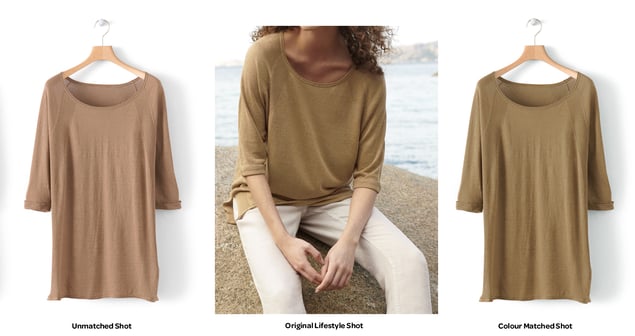
AI does more than just reading product descriptions and analysing information, it is also increasingly interpreting product images.
Recommendation systems are examining visual elements like colour, shape, packaging formats, language and product descriptions using multimodal AI, aiding the categorisations of products, matching them to shoppers searches and identifying visually similar alternatives.
This increases the importance of image quality for FMCG brands. Product images that are inconsistent, outdated or wrong may not be seen as awful to a consumer but may provide AI less credible information to operate with.
Whether your brand is being viewed by an individual or interpreted by an AI-powered system, it is important to have clear, accurate and consistent product imagery.
So, what makes a product AI-ready?
Redesigning your packaging for machine learning is not what it means to be AI-ready.
It most importantly involves ensuring your digital product assets are complete, accurate and consistent wherever they are being used.
Including creating digital assets that include:
• Colour-accurate CGI and product renders
• Consistent packaging representation across every SKU
• Appropriate image size and detail for the digital context
• Accurate product dimensions and proportions
• Current artwork across every packaging variation
• Reliable metadata and structured product information
• Centralised digital asset management
They may appear as operational details, but they are increasingly becoming a strategic, competitive advantage. As before AI can recommend your product, it needs to understand what it is, who it’s for and when it’s best to suggest it.
Consistency at scale is the real challenge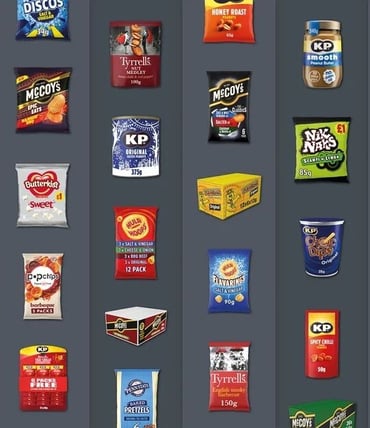
Creating one accurate, high-quality product image is straightforward, but managing thousands is not.
FMCG portfolios often include multiple pack sizes, retailer-specific variants, seasonal promotions, language versions, regional packaging and frequent artwork updates. Every packaging modification generates new digital assets that need to be uniformly represented in internal systems, marketing campaigns, e-commerce channels and all retailers’ platforms.
Maintaining that high level of consistency manually is increasingly complex; however, consistency is more important than ever.
As commerce becomes more digital and AI-assisted, brands need product assets to scale as efficiently as their supply chain whilst retaining accuracy.
Prepare for the future
Branding is not being replaced by AI.
However, it is raising the standards for digital product information.
The brands best positioned for the future won't necessarily be those with the biggest marketing budgets; they’ll be the ones whose products are represented most accurately and consistently across every digital touchpoint.
High-quality digital assets improve today’s retail experiences whilst setting the foundations for tomorrow’s AI-powered commerce, making this investment a crucial, forward-thinking strategic business decision.
How WK360 helps brand stay ahead
At WK360, we help many leading FMCG brands create accurate, scalable digital product assets that combine creative excellence with technical precision.
Our expertise in CGI, colour management and packaging accuracy ensures every product is represented consistently across every channel, campaign and retailer, whether you're managing ten SKUs or ten thousand.
As retail becomes increasingly AI-assisted, trusted digital assets will play an even greater role in product discovery and recommendation.
As the future of retail won't simply depend on products that look good, it will depend on products that can be accurately understood, consistently represented and confidently recommended.
The future shopper may still be human. However, there's an increasing chance AI will make the introduction first.

Take a look at our work with Boots to see just one way in which this discipline lives in the real world.
Reference list
AI (2026). Voice Commerce: How Shoppers Search and Buy by Speaking. [online] bCloud AI. Available at: https://bcloud.ai/visual-search-ecommerce/ [Accessed 9 July 2026].
API4AI (2025). 5 Computer Vision Tactics to Boost E-Commerce Visibility. [online] Medium. Available at: https://medium.com/@api4ai/5-computer-vision-tactics-to-boost-e-commerce-visibility-9220b9c229a5 [Accessed 9 July 2026].
Hexagon Team (2026). How E-Commerce Brands Can Optimize Product Content for AI-Powered Search Recommendations. [online] Hexagon. Available at: https://joinhexagon.com/blogs/how-e-commerce-brands-can-optimize-product-content-motor9c5-03h6 [Accessed 9 July 2026].
Kopp, O. (2024). What is the Google Shopping Graph and how does it work? [online] | Kopp Consulting. Available at: https://www.kopp-online-marketing.com/google-shopping-graph [Accessed 9 July 2026].
salesforce (2022). Salesforce. [online] Salesforce. Available at: https://www.salesforce.com/commerce/ai/shopping-assistants/ [Accessed 9 July 2026].